Ceilings are often overlooked when homeowners plan to refresh their interiors. However, yellow stains, peeling paint, hairline cracks and uneven surfaces can make an otherwise clean home look old and poorly maintained. In Singapore, humidity and moisture exposure can also contribute to ceiling paint deterioration, making proper inspection and preparation essential before repainting.
Hiring a professional ceiling painting service in Singapore can help homeowners restore the appearance of their ceilings and achieve a more consistent finish. Whether you are refreshing an HDB flat, condominium or landed property, understanding the causes of ceiling damage and the correct painting process can help you make informed decisions.
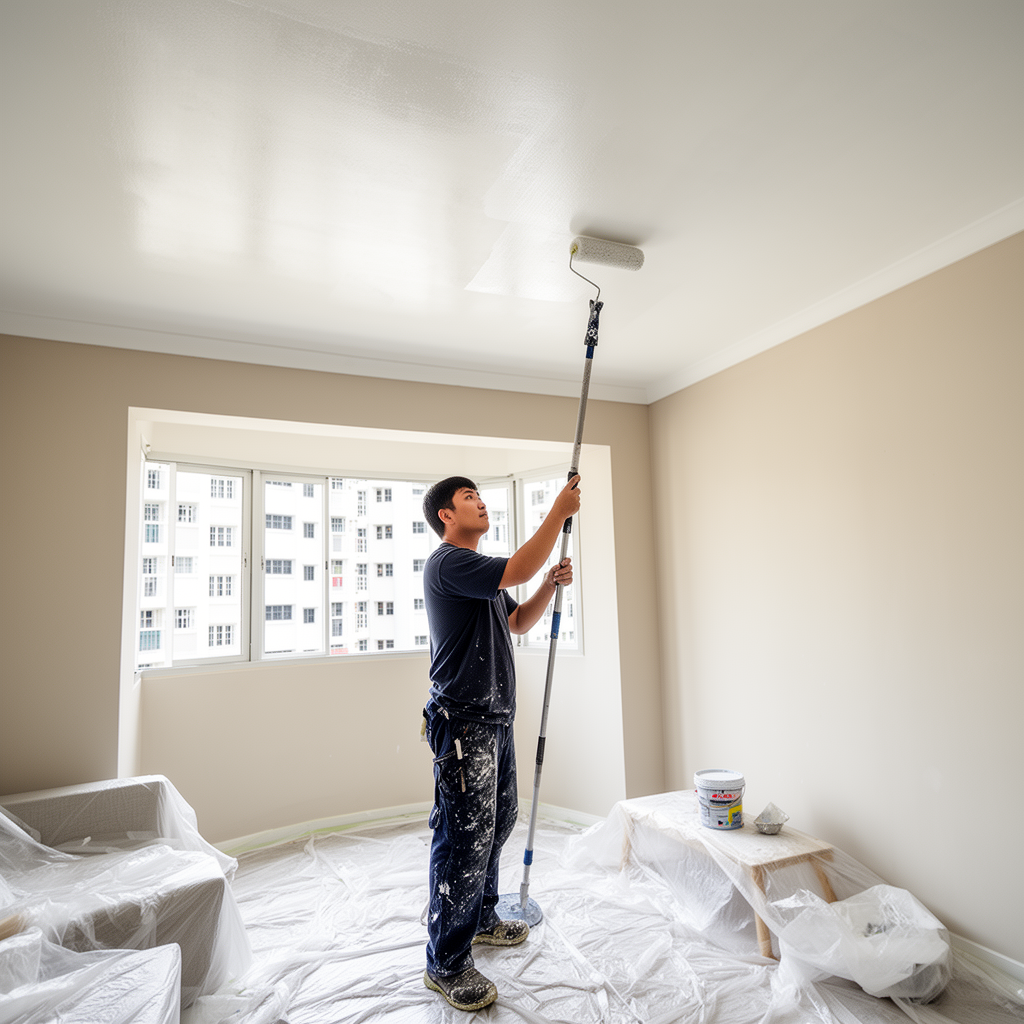
This guide explains common ceiling painting problems, suitable paint choices, preparation methods and what to consider when engaging a professional painting contractor.
Table of Contents
- Why Ceiling Painting Matters
- Common Ceiling Problems in Singapore Homes
- How to Choose the Right Ceiling Paint
- Preparing a Ceiling Before Painting
- The Professional Ceiling Painting Process
- How Much Does Ceiling Painting Cost in Singapore?
- When Should You Hire a Professional Ceiling Painter?
- Tips for Maintaining a Freshly Painted Ceiling
- Conclusion
1. Why Ceiling Painting Matters
A clean ceiling contributes to the overall appearance of a room. Even when the walls and flooring are in good condition, discoloured or peeling ceiling paint can make the entire space appear neglected.
Fresh ceiling paint can brighten a room, improve visual consistency and complement newly painted walls. Light colours, especially white and soft neutral shades, are commonly used because they reflect available light and create a clean, open appearance.
Ceiling painting is particularly useful when preparing a property for occupation, refreshing an older home or completing renovation work. It can also help restore a consistent appearance after repairs, provided that the underlying cause of any damage has been addressed.
For homeowners planning a complete interior refresh, combining ceiling work with professional painting services in Singapore can help achieve a more uniform finish across different rooms.
2. Common Ceiling Problems in Singapore Homes
Before arranging repainting, identify the condition of the ceiling. Different problems require different treatments, and applying paint without proper preparation may only provide a temporary improvement.
Yellow and Brown Ceiling Stains
Yellow or brown marks may result from moisture, previous leaks, smoke or other surface contamination. If the stain is associated with a roof leak, plumbing problem or water seepage, the source should be identified and resolved before repainting.
Once the surface is dry and suitable for treatment, an appropriate stain-blocking primer may help prevent discolouration from bleeding through the new paint.
Peeling and Flaking Paint
Paint may peel because of poor adhesion, unsuitable preparation, moisture or deterioration of the existing coating. Loose material must be removed, and the surface should be prepared properly before new paint is applied.
If moisture is still present, repainting without resolving the problem can lead to further peeling.
Hairline Cracks
Small cracks may develop as building materials move or as existing finishes age. Their cause and extent should be assessed before filling and repainting.
Wider cracks, recurring cracks or cracks associated with other signs of damage may require further inspection rather than a simple cosmetic repair.
Mould and Damp Patches
Moisture can encourage mould growth on ceiling surfaces. The source of the moisture should be addressed, and affected areas should be treated appropriately before painting.
Do not simply cover visible mould with ordinary paint. If the affected area is extensive or keeps returning, seek appropriate professional assessment.
3. How to Choose the Right Ceiling Paint
Choosing suitable paint is important for achieving a neat appearance and ensuring that the coating performs as intended.
Flat or Matt Finish
Matt paint has a low-sheen appearance that can help reduce the visibility of minor surface imperfections. It is often suitable for ceilings in bedrooms, living rooms and other areas where a smooth, understated finish is preferred.
Low-Sheen Finishes
Some low-sheen products offer greater cleanability, depending on the specific formulation. They may be useful in areas where occasional cleaning is required, although the suitability of the product should be checked against the ceiling surface and environmental conditions.
Moisture-Resistant Products
Bathrooms, kitchens and other moisture-prone areas may require paint specifically formulated for those conditions. However, moisture-resistant paint is not a substitute for repairing leaks, improving ventilation or resolving persistent dampness.
Always follow the manufacturer’s recommendations for the intended application and substrate.
For a coordinated interior finish, homeowners can also explore wall painting services in Singapore to select compatible colours and finishes for both walls and ceilings.
4. Preparing a Ceiling Before Painting
Proper preparation is one of the most important parts of ceiling painting. A new coat of paint cannot reliably conceal loose coatings, damp surfaces or poorly repaired damage.
A typical preparation process may include the following steps.
Inspect the surface. Check for stains, peeling paint, cracks, mould and signs of moisture damage.
Resolve underlying problems. Repair leaks or other sources of moisture before proceeding. Allow affected surfaces to dry sufficiently.
Protect the room. Cover flooring, furniture, light fittings and other items that could be affected by dust or paint splashes.
Remove loose paint. Scrape away flaking material and prepare the surrounding edges so the repaired area can blend more evenly with the existing surface.
Repair imperfections. Fill suitable minor cracks and dents with appropriate repair materials, then sand the repaired areas when necessary.
Apply primer where required. Select a suitable primer for the surface condition, particularly when dealing with repaired areas or persistent stains.
The exact preparation requirements depend on the condition of the ceiling. A professional painter should assess the surface before confirming the work involved.
5. The Professional Ceiling Painting Process
A professional ceiling painting project generally begins with an inspection and preparation plan. The painter determines whether the existing surface needs cleaning, repairs, stain treatment or priming.
After protecting the room, the painter prepares the surface and allows repair materials or primers to dry according to the relevant product instructions.
Paint is then applied evenly using suitable tools, with attention to corners, edges and areas around fixtures. The number of coats depends on the paint product, the existing colour, the condition of the surface and the required coverage.
Between coats, the painter should observe the manufacturer’s recommended drying times. Rushing the process may affect the final finish.
Once painting is complete, protective coverings are removed carefully, the work area is cleaned and the ceiling is inspected for uneven coverage, missed spots or visible imperfections.
Homeowners should clarify whether minor repairs, primer, multiple coats and final touch-ups are included in the quotation before work begins.
6. How Much Does Ceiling Painting Cost in Singapore?
The cost of ceiling painting varies according to the size and height of the ceiling, the property’s layout, the condition of the existing paint and the preparation required.
A straightforward repaint of a ceiling in good condition generally involves less work than a ceiling affected by extensive peeling, water stains or damaged plaster.
Other factors that may affect the quotation include difficult access, furniture protection, the type of paint selected and whether walls or other surfaces are included in the project.
To compare contractors fairly, request a written quotation specifying the areas to be painted, the paint product, the number of coats, preparation work and any exclusions.
It is also useful to ask whether stain treatment and minor surface repairs are included or charged separately.
Rather than choosing solely on the lowest price, consider the scope of work and the proposed preparation process. This helps you understand what you are paying for and reduces the risk of unexpected costs.
7. When Should You Hire a Professional Ceiling Painter?
Professional assistance is particularly useful when ceilings have extensive peeling, uneven surfaces, persistent stains or difficult-to-reach areas.
High ceilings and stairwells can also require specialised access equipment and additional safety precautions. Attempting such work without suitable equipment may increase the risk of falls or damage to the property.
A professional contractor can assess the surface, recommend suitable preparation methods and help determine whether repainting alone is sufficient.
Before engaging a service, review the quotation, clarify the expected completion time and ask how the contractor will protect your furniture and flooring.
For larger homes or renovation projects, coordinating ceiling painting with other interior painting work may also improve scheduling and reduce disruption.
8. Tips for Maintaining a Freshly Painted Ceiling
Once the ceiling has been repainted, regular inspection can help you identify problems early.
Keep moisture-prone rooms adequately ventilated where possible, and investigate recurring damp patches or water stains promptly. If a new stain appears, determine its cause rather than immediately covering it with another coat of paint.
Avoid cleaning freshly painted surfaces before the paint manufacturer’s recommended curing period. When cleaning is appropriate, follow the product instructions and use suitable methods to avoid damaging the finish.
If the ceiling suffers from a leak or other building issue, arrange the necessary repairs before considering touch-ups.
Keeping a record of the paint product and colour used can also make future maintenance easier, particularly if only a small section requires repainting.
9. Conclusion
Ceiling painting can make a noticeable difference to the appearance of a home, but achieving a durable finish requires more than simply applying a new coat of paint. Identifying stains, addressing moisture problems, repairing surface defects and choosing suitable products are essential steps in the process.
For homeowners in Singapore, a professional ceiling painting service can help refresh ageing interiors and improve the consistency of the finished space. Before proceeding, assess the condition of your ceiling, compare detailed quotations and ensure that the proposed work includes the preparation your property requires.
If you are planning to repaint your ceiling or refresh several rooms, contact OWJ Painting Service to discuss your requirements and request a quotation. With appropriate preparation and careful application, you can restore a cleaner, brighter appearance to your home’s interior.